


Dr. Francesco Bernardini and his research group possess the most extensive international experience in managing complications caused by hyaluronic acid in the cheek and lower eyelid areas. They have demonstrated the efficacy of treating these complications with hyaluronidase and retreatment.
Hyaluronic acid-based aesthetic treatments are highly effective, safe, and consistently well-received by patients seeking facial rejuvenation through volumization without undergoing surgery. When high-quality, reliable products are administered by experienced professionals in aesthetic medicine, the procedure should be safe.
However, its use in the periocular region, particularly as a non-surgical remedy for under-eye bags and dark circles, requires a high level of expertise, a thorough understanding of periocular anatomy, and significant experience on the part of the treating physician.
Hyaluronic acid complications almost always occur around the eyes, especially in the area between the lower eyelid, cheek, and the upper part of the cheekbone. These issues may arise due to superficial injection, the use of an inappropriate product, or, occasionally, an “unexpected” reaction. I frequently encounter and treat problems related to the administration of hyaluronic acid.
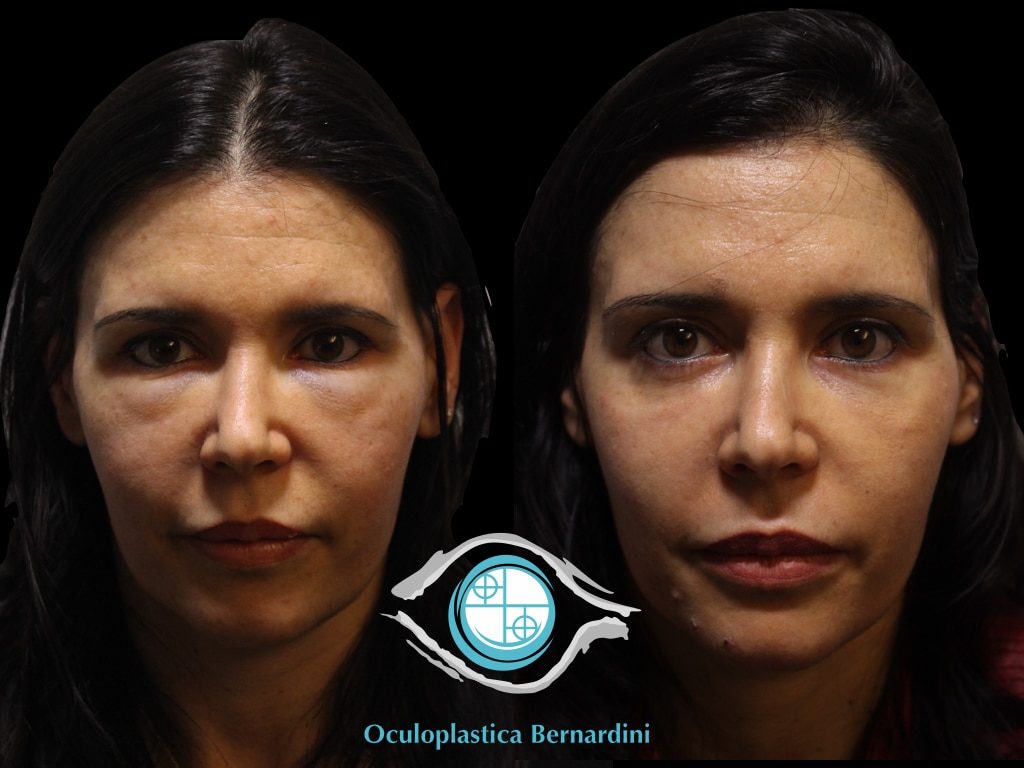
While most complications are purely aesthetic, they can be distressing to patients who seek aesthetic treatments to enhance their appearance. Any worsening of their condition is understandably unacceptable. In cases of complications with resorbable fillers like hyaluronic acid, we often advise patients to wait for spontaneous absorption to occur, as is expected.
Unfortunately, swelling caused by the filler can sometimes persist beyond an acceptable timeframe, lasting even “years” in some cases. This might happen due to abnormal filler placement, where the product is absorbed much more slowly due to a different metabolic environment. Patients experiencing these unsightly effects often seek immediate correction and a return to their previous state. Thankfully, there is now a highly effective solution.
For hyaluronic acid-based fillers, which constitute most resorbable fillers on the market, a natural antidote exists: hyaluronidase. This enzyme specifically dissolves the injected hyaluronic acid. The treatment is performed in the clinic, requiring only a small injection of hyaluronidase into the affected area.
The effects of hyaluronic acid dissolution are visible within a few hours. In cases of extensive filler accumulation, the treatment may be performed in two sessions to achieve complete results. Importantly, hyaluronidase does not affect the body’s natural hyaluronic acid. The chemical bonds protecting our natural hyaluronic acid shield it from hyaluronidase, which acts solely on the filler, restoring the area to its pre-treatment condition in a rapid and almost immediate manner. Additional treatments can be performed 2-4 weeks later if deemed necessary.
Having experienced a complication does not preclude patients from undergoing further treatments. If the complication was due to the injection technique, hyaluronic acid can still be used; if the product itself is suspected, a calcium hydroxyapatite-based filler can be chosen instead.
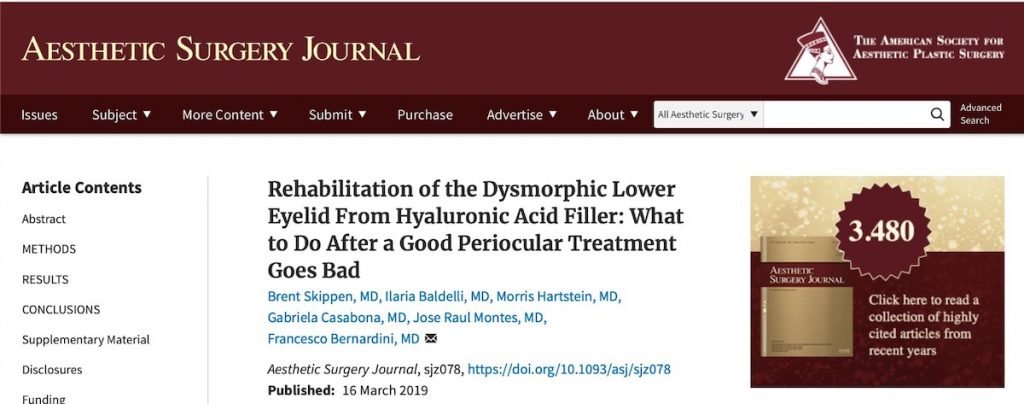
Safety and Effectiveness of Hyaluronidase in Managing Hyaluronic Acid Filler Complications
Many patients consult me to address aesthetic issues resulting from prior hyaluronic acid treatments. Due to its hydrophilic nature, hyaluronic acid draws water into the treated area. As it degrades and absorbs, this water attraction can increase, sometimes leading to swelling, particularly in the eyelids, even after a well-executed treatment.
No one is entirely exempt from the risk of developing eyelid edema after hyaluronic acid injections, even when treated by the most skilled hands. It is not uncommon for swelling to occur even a year after the procedure.
In these cases, the use of an antidote—hyaluronidase—is indicated. Patients often ask whether hyaluronidase might cause additional problems or complications by dissolving their body’s natural hyaluronic acid. In my experience, hyaluronidase has consistently proven effective and safe, restoring the area to its pre-treatment condition without altering the surrounding tissues.
This scientific article, recently published in leading international literature, supports the safe use of hyaluronidase and confirms its indications for correcting previous hyaluronic acid treatments.

